
International shipping asks more of a package than a typical domestic delivery. A piece of machinery can travel by truck, sit in a warehouse, move through a port, cross an ocean, clear customs, and continue by rail or local carrier before it reaches its destination. During that journey, the cargo may encounter vibration, shifting loads, changing temperatures, humidity, and repeated handling.
For businesses across North Carolina, from manufacturers in the Charlotte region to equipment suppliers, industrial facilities, and distributors throughout the state, reliable export packaging can be an important part of keeping international shipments on schedule. Whether the load is heavy machinery, pallet parts, delicate equipment, or a product with an unusual shape, the crate needs to match the job from the beginning.
This guide explains what export crates are, how custom wood crates work, why ISPM-15 matters, and what North Carolina businesses should consider before sending materials abroad.
What Are Export Crates?
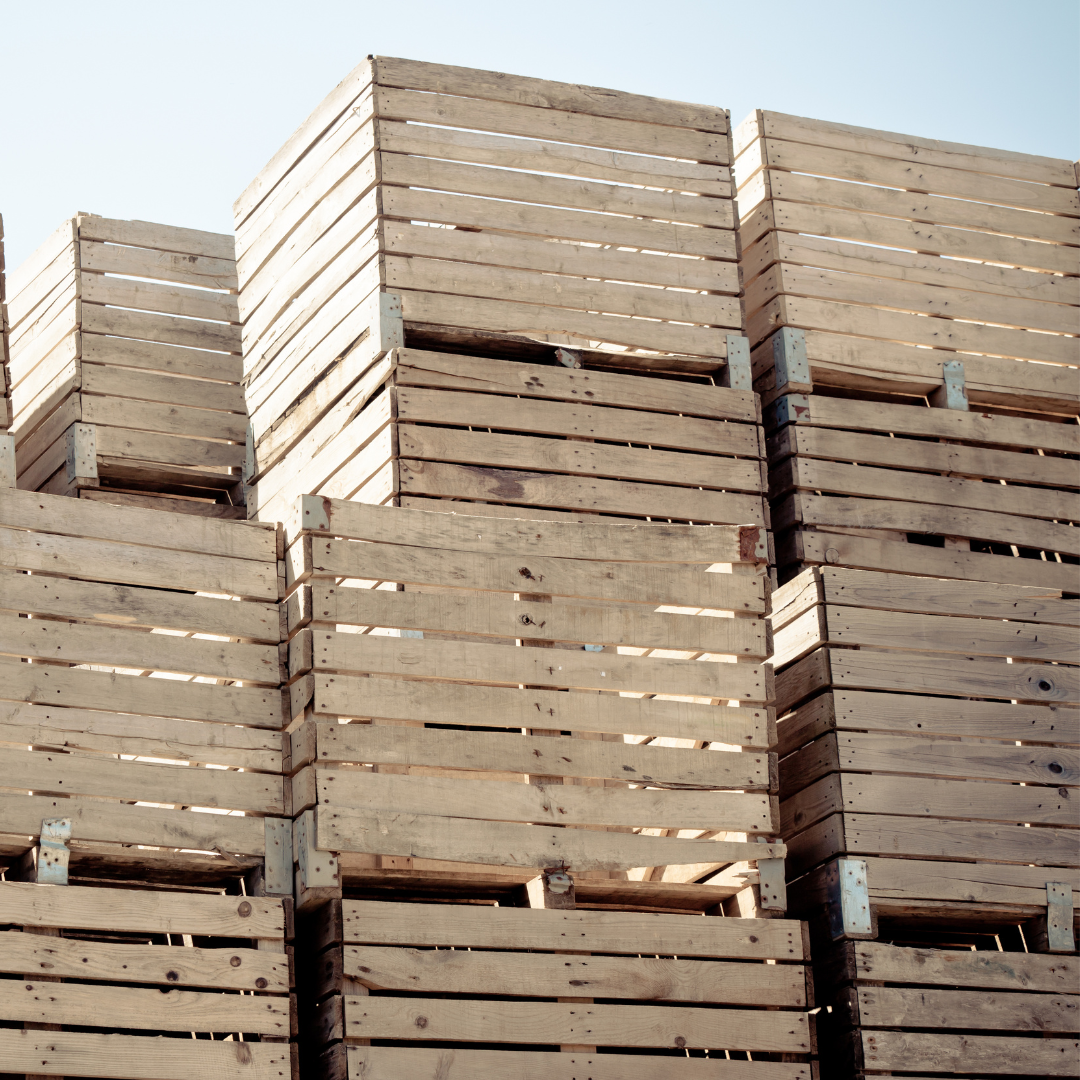
Export crates are heavy-duty wooden shipping containers made for cargo traveling internationally. They are designed to protect items that may face a longer, more demanding journey than a standard local or domestic shipment.
A crate may look straightforward from the outside, but its strength comes from its design. The floor must carry the product’s weight. The walls and top need to resist outside pressure and handling impacts. Internal blocking and bracing must prevent the item from shifting. The overall structure must also allow warehouse teams, freight carriers, and port personnel to move the package safely.
Export crates are commonly used for items that do not fit neatly into standard cartons or containers. These can include industrial equipment, machine components, large replacement parts, motors, tools, fixtures, sensitive instruments, and palletized goods that need added protection.
The right crate depends on the cargo. A lightweight but fragile item may need a different approach than a dense piece of equipment weighing several thousand pounds. The same is true for cargo with a high center of gravity, exposed control panels, glass surfaces, moving parts, or irregular dimensions.
At Somers Lumber, we design custom export crates around the material being shipped rather than forcing a product into a generic package. That means considering the dimensions, weight, shape, destination, transportation method, handling requirements, and protection needs of each shipment.
Export Crates vs. Standard Shipping Crates
Not every wooden crate is an export crate. A standard domestic crate may provide appropriate protection for a short truck shipment within the United States, especially when the load moves directly from one facility to another. International shipping creates additional considerations.
Export crates often require stronger construction because the cargo may pass through several transfer points. A crate can be lifted, stored, loaded into a container, unloaded at a port, and moved again before delivery. The amount of handling increases the importance of durable framing, secure fasteners, and sound internal support.
International shipments also introduce compliance requirements for solid wood packaging materials. Many countries require wood packaging to meet ISPM-15 standards. That requirement is separate from the physical strength of the crate, but it is equally important. A well-built crate that does not meet the required wood packaging standard can still cause problems during inspection or customs processing.
In other words, a domestic crate focuses mainly on safely moving the product. An export crate must protect the product while also addressing the realities of international transport and wood packaging rules.
Why International Cargo Needs Stronger Protection
Long-distance freight moves through environments that are difficult to predict. Even when cargo is handled carefully, it can experience vibration, jolting, stacking pressure, moisture exposure, and movement during transit.
Ocean freight is a good example. A shipment may spend days or weeks inside a container where humidity and temperature change over time. It may also be exposed to the motion of the vessel, the shifting forces created by loading and unloading, and extended storage at ports or distribution facilities.
Air freight can move quickly, but it still involves handling at multiple terminals. Cargo must withstand loading equipment, transfer between carriers, and the conditions that come with air transport. Truck and rail shipments have their own demands, including road vibration, braking forces, and changes in handling crews along the route.
Export crates provide a durable outer structure that helps manage those risks. The crate creates a defined space around the load and gives the shipment a stable form for handling. When designed correctly, it can reduce the chance of direct impact to the product and keep equipment from sliding or tipping inside the package.
Preventing Internal Movement
A strong exterior alone is not enough. One of the most common causes of shipping damage is movement inside the crate.
When an item has room to shift, the crate can become a container for repeated impacts. Every stop, turn, lift, or transfer can create motion. Over a long journey, even small movements may cause surface damage, bent components, loose hardware, or more serious structural problems.
Internal blocking, bracing, and supports help hold the cargo in place. These components may be built specifically around the product’s base, frame, attachment points, or center of gravity. Depending on the shipment, the crate may also include straps, cushioning materials, moisture barriers, or protective wrap.
For example, a heavy motor may need substantial blocking around its base and reinforced support under its weight. A delicate instrument may need spacing around sensitive areas, protective padding, and a design that prevents contact with the crate walls. The crate becomes part of the overall protection plan, not simply the final layer added after packing.
Supporting Safe Handling
A crate should also help the people moving the shipment. Properly placed forklift access, skids, reinforced bases, and a balanced load can make a significant difference during loading and unloading.
When a crate is difficult to lift or poorly balanced, the risk of handling damage increases. Forklift operators need a clear way to engage the load without striking the crate or its contents. Warehouse teams need to know which side should remain upright and whether the package can be stacked.
Clear handling marks and thoughtful crate design support safer movement throughout the supply chain. This is especially important for North Carolina businesses sending freight to ports, airports, or distribution centers before it begins its international journey.
Understanding ISPM-15 Requirements
ISPM-15 is an international standard that applies to many forms of solid wood packaging used in global shipping. Its purpose is to reduce the risk of transporting wood-boring pests and other harmful organisms from one country to another.
The standard applies to wood packaging materials such as crates, pallets, skids, dunnage, boxes, cases, and similar solid-wood components. To meet ISPM-15 requirements, the wood packaging must be treated and marked according to the standard.
For shippers, this matters because customs and agricultural authorities may inspect wood packaging during international movement. If the crate is not properly treated or marked when required, the shipment may face delays, additional action, or refusal of entry.
At Somers Lumber, our export crate materials comply with ISPM-15 export standards. This helps customers prepare wood packaging that meets the needs of international shipping and global customs requirements.
What the ISPM-15 Mark Means
The mark found on compliant wood packaging is sometimes called an IPPC mark. It identifies the country, producer, treatment method, and other required information associated with the packaging material.
The mark matters because it gives inspectors a visible indication that the wood packaging has been handled under the applicable treatment and certification process. It should be legible and placed where it can be found during an inspection.
Shippers should not assume that any wood crate is suitable for export simply because it is new or looks professionally built. The wood packaging must meet the requirements that apply to the shipment and destination.
Heat-Treated Lumber and Export Crates
Heat treatment is commonly used to prepare solid wood packaging for international use. The treatment process helps address pest concerns associated with raw wood materials.
For a customer, the practical takeaway is simple: if a shipment is crossing international borders and uses solid wood packaging, compliance should be part of the planning process from the start. It is far easier to build the correct crate before shipping than to address a packaging issue after cargo has reached a terminal or border inspection point.
Requirements can vary by destination and shipment type. We recommend confirming the requirements that apply to the receiving country, freight route, and goods being shipped. The crate should support that process rather than create uncertainty later.
When North Carolina Businesses Need Export Crates
North Carolina has a diverse manufacturing, distribution, construction, technology, and industrial economy. Companies throughout the region ship equipment, materials, replacement parts, and finished products across the country and around the world.
Export crates are often needed when a shipment leaves the United States, but they can also be appropriate for domestic freight that requires extra protection due to value, size, fragility, or handling demands.
Businesses in the North Carolina region may need custom export crates in several situations.
Shipping Heavy Machinery Overseas
Heavy machinery can be difficult to package because weight is only one part of the equation. The crate must also account for the machine’s footprint, height, center of gravity, lifting points, and vulnerable components.
A custom-built wood crate can provide a reinforced base, tailored blocking, and bracing that supports the equipment during movement. It can also accommodate components that ship with the machine, such as guards, accessories, control boxes, or replacement parts.
For equipment headed overseas, the crate may travel through ports, containers, warehouses, and multiple carriers before arriving at the final site. Planning the packaging around those conditions helps protect both the machine and the project timeline.
Protecting Delicate Equipment
Some shipments are not especially large or heavy, but they still require careful protection. Delicate equipment may include precision tools, electronics, specialized components, laboratory equipment, display materials, or products with finished surfaces that can be damaged easily.
For these loads, a custom crate can create separation between the product and the outer crate walls. Internal supports can secure the item while cushioning materials protect sensitive areas. A correctly sized crate helps avoid the open space that allows cargo to move during transit.
The goal is not simply to add more material. It is to design protection around the specific risks facing the product.
Moving Oversized or Unusually Shaped Materials
Standard packaging works best for standard products. When an item is too long, too tall, too wide, or too irregular for conventional packaging, custom export crates become a practical solution.
An oversized component may need a crate that supports the load at multiple points. A long item may need added framing to prevent flexing. A product with an unusual profile may need custom wood supports that hold it in a stable position without placing pressure on delicate areas.
This is where accurate measurements become especially important. Customers should provide the complete dimensions of the product, including attached parts, protrusions, handles, bases, and any components that cannot be removed before shipping.
Preparing for Long-Term or Port Storage
Some shipments do not move directly from the production floor to the final destination. They may wait in a warehouse, staging area, port facility, or container yard before loading. They may also be stored at the destination while a project site is prepared.
A crate designed for extended storage must account for more than transport. The materials should remain stable, the cargo should stay protected, and the load should be positioned in a way that makes later handling straightforward.
Weather-protected storage and distribution considerations are part of the broader logistics process. When we discuss export crate needs with a customer, we look beyond the first truck ride and consider the full route the shipment is likely to take.
How Custom Export Crates Are Designed
A custom crate begins with information. The more clearly the shipment is understood, the better the design can support it.
At Somers Lumber, custom wood crate solutions are built to fit a product’s exact dimensions. That starts with the item itself, but it also includes the way the item will travel and be handled.
Product Dimensions and Weight
The first question is usually size. Length, width, and height determine the minimum internal space needed for the product. However, external crate dimensions matter too, especially when cargo will be loaded into a freight container, moved through a warehouse, or carried by a specific truck type.
Weight affects the base structure, lumber selection, fastener requirements, and support placement. A crate carrying a high-weight load needs a foundation that can bear that weight without sagging or splitting during forklift movement.
We also consider whether the weight is evenly distributed. A machine with most of its mass on one side needs different support than a centered, evenly balanced load.
Shape, Fragility, and Sensitive Areas
Cargo shape changes everything. A square, palletized item may require a relatively simple crate design. A machine with exposed shafts, controls, screens, or angled surfaces requires more tailored protection.
Before crating, customers should identify areas that must not bear weight or come into contact with bracing. These details help determine where blocking can safely be placed and where clearance is needed.
Some items also require protective wrapping, corrosion prevention, vapor barriers, or desiccants before they go into the crate. Those materials work alongside the wood structure to provide a complete shipping solution.
Transportation and Handling Needs
The transportation method influences crate design. An item moving by ocean freight may need different moisture protection than one moving by air. A shipment that will be handled by forklifts needs secure access points. A load that cannot be tilted may require clear orientation marks and a design that preserves its upright position.
The route matters as well. Cargo traveling from a North Carolina facility to a seaport may first move by truck, then transfer to container loading, then continue overseas. Each stage introduces handling considerations that should be addressed before the crate is built.
Choosing the Right Lumber and Construction
Wood selection is a major part of crate performance. Somers Lumber uses premium hardwoods and treated lumber to provide strength and long-term reliability through shipping.
The right materials depend on the load. A heavy shipment may need more substantial framing and a reinforced base. A lighter but sensitive item may need a balanced combination of structural lumber and protective paneling. The goal is to create a crate that offers the required protection without unnecessary bulk.
Construction quality also matters. Strong joints, reliable fasteners, properly placed framing, and stable supports all contribute to the crate’s performance. A crate must remain intact through lifting, transport, storage, and unloading—not just look complete when it leaves the facility.
Best Practices for Packing Export Crates
A well-designed crate provides the structure, but correct packing ensures the product benefits from that structure. Packing should be treated as a process, not an afterthought.
Inspect the Product Before Packing
Before an item goes into a crate, inspect it for loose parts, exposed components, unsecured doors, removable accessories, or areas that need added protection. This is the best time to identify any existing damage and make sure the shipment is ready for transport.
If the product includes separate components, decide whether they should travel inside the main crate, in a divided section, or in separate packaging. Loose parts should never be left free to move around the crate.
Secure the Load at Its Strongest Points
Blocking and bracing should support the product at locations designed to carry weight. For many industrial products, that may mean the base frame, skids, mounting points, or other structural areas.
Avoid putting pressure on decorative panels, electrical connections, delicate controls, or thin surfaces. A crate should hold the item steady without creating a new point of damage.
The goal is to prevent movement in every direction. If the cargo can slide forward, backward, side to side, or upward during transport, more support may be needed.
Leave Room for Protection, Not Movement
The crate should fit the cargo closely enough to reduce open space, but it should also allow room for protective materials. A crate that is too tight can put pressure on the product. A crate that is too large can allow the item to shift.
This balance is one reason custom export crates are valuable. They are built around the actual cargo and its packaging needs rather than relying on an approximate size.
Protect Against Moisture
International shipping can expose cargo to humidity, condensation, and changing temperatures. Wood crates provide structural protection, but some products need additional moisture control inside the package.
Depending on the product and route, this may involve wrapping, barrier materials, desiccants, sealed bags, or corrosion protection. Metals, electronics, finished surfaces, and sensitive equipment often require special consideration.
The best approach depends on the cargo. We encourage shippers to think about the product’s sensitivity to moisture before the crate design is finalized.
Label Clearly
Clear labels help carriers and handlers understand how to move the shipment. Orientation labels, lifting instructions, fragile markings, shipping addresses, and other handling information should be easy to see.
A crate may also need marks related to its compliance status and shipping documentation. Accurate labeling supports efficient handling and helps reduce confusion when cargo changes hands.
Common Mistakes to Avoid
A successful international shipment starts by avoiding preventable packaging mistakes.
One common issue is using a crate that is strong enough for the product but not compliant for the destination. When solid wood packaging is required to meet ISPM-15 standards, it should be treated and marked appropriately before the shipment begins.
Another mistake is underestimating the importance of internal bracing. A crate can have thick walls and a reinforced base, but if the product is allowed to move inside, it remains vulnerable.
Oversizing is also a concern. Extra room may seem safer, but unnecessary empty space creates an opportunity for shifting. The crate should provide enough clearance for protective materials without leaving the cargo loose.
Shippers should also avoid designing solely around the item’s weight. The center of gravity, shape, lifting requirements, and sensitive areas all matter. A balanced, properly supported load is generally safer to handle than one that is merely contained.
Finally, do not wait until the last minute to plan export packaging. International freight schedules, treatment requirements, crate production, and documentation can all require lead time. Early planning gives the shipment a better chance of moving smoothly.
Working With Somers Lumber on Custom Crating
At Somers Lumber & Manufacturing, we approach export crates as part of the shipping process, not as an off-the-shelf product. Our team designs wood crates for the specific dimensions and needs of the material being shipped.
We work with customers shipping heavy machinery, pallet parts, and delicate equipment that require durable construction and a tailored fit. Our lumber manufacturing capabilities also support precise cuts and consistent dimensions for wood packaging components.
Customers preparing a crate request can make the process easier by gathering a few details in advance:
- Overall dimensions of the item, including protruding components
- Total weight and, if known, the center of gravity
- Destination country and transportation method
- Whether the item will travel by truck, air, ocean freight, or a combination
- Any sensitive surfaces, fragile components, or restricted lifting areas
- Photos, drawings, or specifications for unusual equipment
- Expected storage conditions and whether moisture protection is needed
With accurate information, a custom crate can be designed to protect the product, support safe handling, and meet the applicable packaging needs for international transport.
Your Export Crate Questions, Answered
What is an export crate?
An export crate is a wooden shipping container designed to protect cargo during international transportation. At Somers Lumber, we build custom export crates around the item’s dimensions, weight, handling needs, and shipping conditions.
Do export crates need to be ISPM-15 compliant?
Many international shipments using solid wood packaging require ISPM-15 compliance. We use wood packaging materials that comply with ISPM-15 export standards for crates intended for international transport.
What types of products need custom export crates?
Custom export crates are useful for heavy machinery, pallet parts, delicate equipment, oversized components, irregularly shaped products, and items that need additional support during shipping. We design the crate around the product rather than using a one-size-fits-all format.
How do you determine the right size export crate?
We start with the product’s complete dimensions, weight, shape, and protection requirements. We also allow room for internal blocking, bracing, wrapping, and other materials needed to keep the cargo secure.
Can a wooden export crate protect equipment from moisture?
A wooden crate provides structural protection, but moisture-sensitive equipment may need additional internal protection. We consider the shipping route and storage conditions so customers can plan for appropriate wrapping, barriers, or other moisture-control materials.
What information should I provide before ordering an export crate?
Provide the product’s dimensions, weight, destination, transportation method, photos or drawings, and details about fragile areas or special handling needs. This information allows us to design a crate that supports the cargo throughout its route.
Prepare the Shipment Before It Moves
Export crates are an important part of protecting materials as they travel beyond North Carolina and across international borders. The right crate combines durable lumber, custom dimensions, internal support, safe handling features, and compliant wood packaging materials.
At Somers Lumber, we build export crates for the demands of international transport. By planning the crate around the product and its journey, businesses can take a more prepared approach to protecting machinery, equipment, pallet parts, and other valuable materials before they enter the global supply chain.
