If you work with lumber long enough, you learn that the board you start with is not always the board you need. Some projects call for a narrower face, a cleaner edge, or a more consistent width. That is where ripping comes in.
At Somers Lumber, we see ripping as one of the most practical cuts in lumber processing. It helps turn wider stock into precision-cut boards that fit the job, whether the material is being prepared for construction, cabinetry, millwork, packaging, or manufacturing.
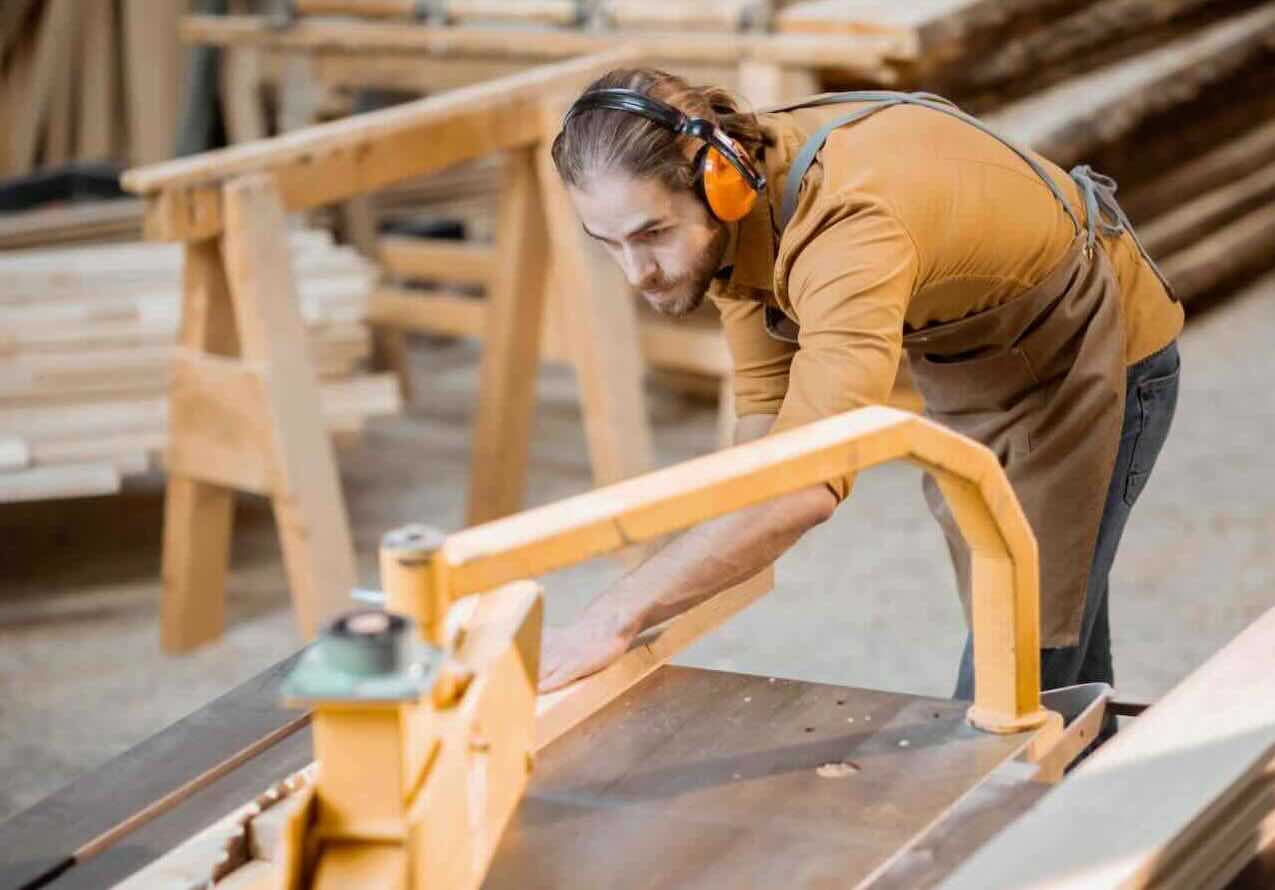
Ripping is the process of cutting lumber lengthwise with the grain to create boards of specific widths. While the cut itself sounds simple, the quality of that cut matters. Clean, consistent ripping helps reduce waste, limit extra labor, and keep projects moving.
In this guide, we are going to walk through what ripping means, how it differs from other cuts, when it becomes necessary, and why so many professionals in North Carolina depend on precision-cut boards. We will also explain how we approach ripping at Somers Lumber and what details matter when planning a ripping job.
What Ripping Means in Lumber Processing
Why Ripping Is Different From Other Lumber Cuts
Many people use cutting terms loosely, but in lumber processing, the difference between one cut and another matters. Ripping changes width. Crosscutting changes length. Resawing changes thickness. Each cut solves a different problem, and understanding that helps you choose the right service for the job.
A crosscut is made across the grain. It shortens the board and is commonly used when material needs to be cut to finished length. That is a useful cut, but it does not help when the board is too wide for the application. If a customer needs a narrower component while keeping the full length, crosscutting is not the answer. Ripping is.
Resawing is another cut that often gets confused with ripping. In resawing, the board is cut through its thickness, creating thinner boards from a thicker piece. That is useful when a project needs a thinner profile or multiple thinner faces from the same stock. But if the issue is width rather than thickness, resawing does not solve it. Again, ripping is the cut that addresses that need.
We see this distinction matter all the time in North Carolina projects. A manufacturer may need boards ripped to width before they are resawn to thickness. A packaging operation may need lumber ripped to precise dimensions so it fits a crate or pallet specification. A construction team may need boards narrowed for a particular framing or finish application without changing the board’s length. Once you understand the purpose of each cut, the choice becomes much clearer.
Why Precision Matters in a Rip Cut
On paper, ripping sounds easy. You feed a board through a saw and make it narrower. But the true test of a rip cut is not whether the saw makes it through the board. The true test is whether the finished piece is straight, clean, and consistent enough to perform in the next phase of work.
A clean rip cut produces an edge that is usable. A precise rip cut produces a board that matches the required width again and again. That consistency matters whether you are running a single custom order or processing full packs for industrial use. It matters in residential work where trim or paneling needs to line up neatly. It matters in commercial work where production tolerances are tighter and rework becomes expensive.
Poor ripping can create several problems. Boards can drift off dimension. Edges can show tear-out or burning. Widths can vary within the same run. Material can become less efficient to handle downstream because operators must pause to sort, trim, or correct issues that should have been handled during processing. Those are the kinds of delays professionals try to avoid.
At Somers Lumber, our ripping service is built around the idea that the cut should support the next step, not complicate it. We use ripping to produce clean, straight cuts with consistent widths so the lumber is ready for construction, cabinetry, manufacturing, packaging, and other practical uses. For many of our customers, that precision is not a luxury. It is part of keeping their workflow moving.
When Ripping Becomes Necessary
Not every project needs ripping, but when it does, the need becomes obvious quickly. The most common reason is simple: the available board is wider than the finished application requires. A standard-size board may be close, but not exact. In that case, ripping brings the material to the proper width.
This happens constantly in custom work. Cabinet shops often need components that do not match off-the-shelf dimensions. Millwork operations may need strips, rails, stiles, or panels cut to exact widths for a clean fit. Flooring and paneling work can also depend on highly consistent widths, especially when the finished surface must look uniform from board to board. In those settings, ripping is essential.
Ripping also becomes necessary in production environments where repeatability matters as much as size. A manufacturer may need hundreds or thousands of linear feet ripped to the same width so material feeds cleanly into machinery or assembly operations. If incoming lumber varies too much, the entire process slows down. In that kind of setting, ripping is about keeping production stable.
Construction professionals also run into this need more often than people realize. A framing detail, built-in element, repair, or finish application may call for boards narrower than common stock dimensions. Rather than trying to adapt the design to the lumber on hand, ripping allows the lumber to match the design. That saves time and improves the finished result.
Common Applications for Ripped Lumber
One of the reasons ripping remains such an important service is that it applies to so many types of work. At Somers Lumber, we see ripped lumber used across a broad range of industries and project types.
Cabinetry is one of the clearest examples. Cabinet components need to be consistent, square, and properly sized. Small differences in width can show up later in door alignment, face frame assembly, shelving layout, and final fit. Ripping helps create the repeatable parts that cabinetry work depends on.
Flooring and paneling also benefit from ripped boards. When boards need to present a consistent face width, the cut quality matters. Uniform dimensions support a better layout and a more refined finished surface. The same is true in custom millwork, where decorative and functional elements often need exact sizing to fit the design.
Construction work uses ripped lumber in more practical but equally important ways. Contractors may need boards adjusted for trim details, blocking, edge conditions, or custom framing situations. A project rarely unfolds exactly around standard stock sizes. Ripping gives crews a way to get the dimensions the job actually calls for.
Manufacturing and packaging often demand the highest level of repeatability. In those environments, ripping is not just a convenience. It is part of the system. Material may need to arrive pre-sized so it can move directly into production or be bundled for efficient handling. That is why many customers ask us to rip full packs or bundles and integrate that cut with other services under one roof.
What North Carolina Professionals Need From Ripping
North Carolina has a broad mix of construction, woodworking, manufacturing, and distribution activity, and that diversity shapes how lumber gets used. Professionals in this region often need more than raw material. They need material prepared for the realities of the job, the shop, or the production line.
A builder in the region may need ripped lumber that reduces work on the job site. When crews are managing schedules, deliveries, and changing conditions, pre-sized boards help keep the day moving. A millwork or cabinetry shop may need repeatable widths because one inconsistent run can slow fabrication and lead to avoidable waste. A manufacturer may need lumber ripped and bundled so it can move straight into an established workflow.
Another factor is logistics. North Carolina businesses often balance speed, labor, and material handling very carefully. If lumber can be processed before it reaches the customer’s facility, that can remove several steps from the job. It can reduce in-house cutting, improve handling efficiency, and make incoming material easier to sort and use.
That is one reason we built our services around practical manufacturing needs. Ripping does not happen in isolation. It often works alongside pack cutting, resawing, storage, and distribution. For professionals across the region, the value is not just that the lumber gets cut. It is that the lumber arrives in a form that makes the next step easier.
How We Approach Ripping at Somers Lumber
At Somers Lumber, we approach ripping as a precision manufacturing service, not a rough yard cut. The purpose is to produce lumber tailored to the customer’s specifications so it performs as expected in the field, in the shop, or on the production floor.
Our ripping service is designed for standard widths and custom sizes, with flexibility for both small and large orders. We work with a wide range of hardwood and softwood species, and we process material for construction, packaging, and manufacturing uses. Depending on the job, we can work from a customer’s cut list or target specifications so the final dimensions align with the intended application.
Consistency is a major part of the process. We focus on clean, straight cuts and repeatable dimensions because those qualities make the lumber more usable. A board that arrives at the right width and stays consistent through the run saves time later. It reduces the need for extra handling and makes it easier for the customer to move into assembly, installation, or machining.
We also look at ripping as one part of a larger workflow. Some jobs involve ripping alone. Others combine ripping with resawing, pack cutting, or broader remanufacturing steps. Because those services are available together, customers can move from rough stock toward near-finished components without dividing the work between multiple providers.
Signs a Project Calls for Ripping
Sometimes a customer knows from the start that ripping is necessary. Other times, the need shows up in the details. There are several clear signs that a project should include ripping.
The first sign is dimensional mismatch. If the available board width does not match the width required for the finished part, ripping is the logical solution. This is especially common in custom construction, cabinetry, and millwork, where standard stock dimensions often need adjustment.
The second sign is repeated in-house cutting. If a crew or shop keeps narrowing boards on its own to make them usable, that is often a clue that ripping should happen before delivery instead. Pre-sized material can save time and reduce labor where it matters most.
The third sign is inconsistency in downstream work. If assembly slows down because boards vary in width, or if machining setups become harder to maintain because incoming stock is uneven, precise ripping can remove that variable. In many operations, the real benefit of ripping shows up after the cut, when the rest of the process runs more smoothly.
The fourth sign is scale. A one-off adjustment may be manageable in-house. A large run of custom-width boards is another story. When volume rises, repeatability becomes more important, and that is where professional ripping makes the biggest difference.
How Ripping Supports Efficiency on the Job Site
Job sites are busy places, and every extra step has a cost. Material that arrives closer to its finished dimensions reduces the amount of cutting, sorting, and measuring that has to happen in the field. That can improve pace and help crews stay focused on installation instead of stock preparation.
When boards arrive ripped to the proper width, they are easier to stage and easier to use. Crews spend less time modifying material and more time moving forward with the actual build. This is especially helpful when the work includes repetitive details, custom framing situations, or finish elements that require consistency from one piece to the next.
There is also a quality advantage. On-site cutting has its place, but field conditions are not always ideal for repeatable precision. A professional ripping process helps remove some of that variability. The result is lumber that is ready to fit the intended application with fewer surprises along the way.
For North Carolina contractors balancing labor costs and deadlines, that kind of preparation matters. A small gain in efficiency repeated across a full job can make a noticeable difference.
How Ripping Helps Manufacturing and Industrial Workflows
Manufacturing puts different demands on lumber than job site work does. In a production setting, the question is not only whether the board is usable. The question is whether the board can move through the next step without interruption.
That is where consistent ripping becomes especially valuable. When widths stay repeatable across full packs, assembly and machining become easier to manage. Operators can set up with more confidence. Material handling becomes more efficient. Incoming lumber can move directly into the planned workflow instead of being held back for additional sizing.
At Somers Lumber, we regularly work with customers who need material pre-sized for production and industrial applications. In those cases, the precision of the rip cut supports more than the board itself. It supports the rhythm of the entire operation.
The same logic applies to packaging and wood component work. When dimensions need to align with a design or system, consistency matters just as much as the cut itself. That is why many customers ask for full packs or bundles ripped and prepared so the material arrives ready for the line.
What Information Matters Before a Ripping Job
A successful ripping job starts with clear details. The more precisely the requirements are defined up front, the more efficiently the work can move.
At Somers Lumber, we typically need to know the species, thickness, incoming sizes, desired ripped widths, approximate footage, and any special tolerance or packaging requirements. Those details help us confirm feasibility, align the run with the intended use, and plan the most efficient path through production.
Tolerance requirements are especially important. A board width that is acceptable for one application may not work for another. Construction, packaging, cabinetry, and industrial work can all have different standards. When those expectations are clear from the beginning, it is easier to calibrate the run accordingly.
Packaging and delivery details can also matter more than customers first assume. If the material is going directly to a plant, line, or job site, bundle size, labeling, and handling may affect how useful the shipment is once it arrives. The best ripping jobs are the ones that consider not just the cut, but what happens after the cut.
A Practical Example of When Ripping Makes Sense
Imagine a North Carolina millwork shop receiving a large order for custom panel components. The lumber on hand is high quality, but the boards are too wide for the finished specification. The shop could size each piece individually, but that would tie up labor, add handling time, and create another point of inconsistency.
In that case, ripping the material before it reaches the shop makes more sense. The boards arrive at the target width, the team can move into fabrication faster, and the finished components start from a more consistent base. Nothing about the design has to change. The lumber is simply prepared to suit the work.
The same principle applies to a manufacturer using wood components in a repetitive process. If boards arrive already ripped to the required widths, they are easier to stage, easier to process, and less likely to create slowdowns. The more repeatable the incoming material, the easier it is to keep the operation steady.
That is the practical value of ripping. It is not about cutting for the sake of cutting. It is about matching lumber to real-world use.
Straight Answers About Ripping Lumber
What is ripping in lumber?
At Somers Lumber, ripping means cutting a board lengthwise with the grain to create a specific width. We use ripping when a customer needs lumber narrower than the original board while keeping the full length of the piece.
When is ripping necessary?
Ripping becomes necessary when standard board widths do not match the finished dimensions required for the job. We see that most often in construction, cabinetry, paneling, millwork, packaging, and manufacturing applications where consistency matters.
Is ripping the same as crosscutting?
No. At Somers Lumber, we use ripping to change the width of a board by cutting with the grain. Crosscutting changes the length of a board by cutting across the grain.
Is ripping the same as resawing?
No. Ripping changes width, while resawing changes thickness. We often help customers decide which process fits their project based on whether they need a narrower board, a thinner board, or both.
What kinds of lumber can be ripped?
At Somers Lumber, we rip a wide range of hardwood and softwood species. The right setup depends on the species, the incoming size, the target width, and the tolerance required for the finished material.
What information do you need to quote a ripping job?
We need the species, thickness, incoming board sizes, desired ripped widths, approximate footage, and any special tolerance or packaging requirements. From there, we can review the job and determine the best way to process the material.
Understanding the Value of Precision-Cut Boards
The phrase precision-cut boards can sound technical, but the idea is simple. A precision-cut board is a board prepared to suit its purpose. It fits the job more closely, performs more consistently, and requires less correction later.
That matters in every setting where lumber is part of a larger system. In a construction setting, precision-cut boards help crews work faster and fit components more cleanly. In a millwork or cabinetry setting, they help maintain consistency across visible and functional parts. In manufacturing, they help stabilize the workflow by reducing variation in incoming stock.
At Somers Lumber, we see ripping as one of the most effective ways to create that kind of precision. The cut itself is straightforward. The result is what matters. When the width is right, the edge is clean, and the run stays consistent, the lumber becomes more useful from the moment it arrives.
That is why ripping remains such an important service in North Carolina and beyond. It answers a basic but frequent need in lumber processing: getting from available stock to usable dimensions without adding unnecessary work downstream. For professionals who depend on fit, repeatability, and efficiency, that need never really goes away.
Whether the project involves trim components, cabinetry parts, paneling, wood packaging, or production-ready material, ripping helps turn raw boards into purpose-built lumber. And when that cut is done with care, the difference shows up not just in the board itself, but in everything that happens next.